

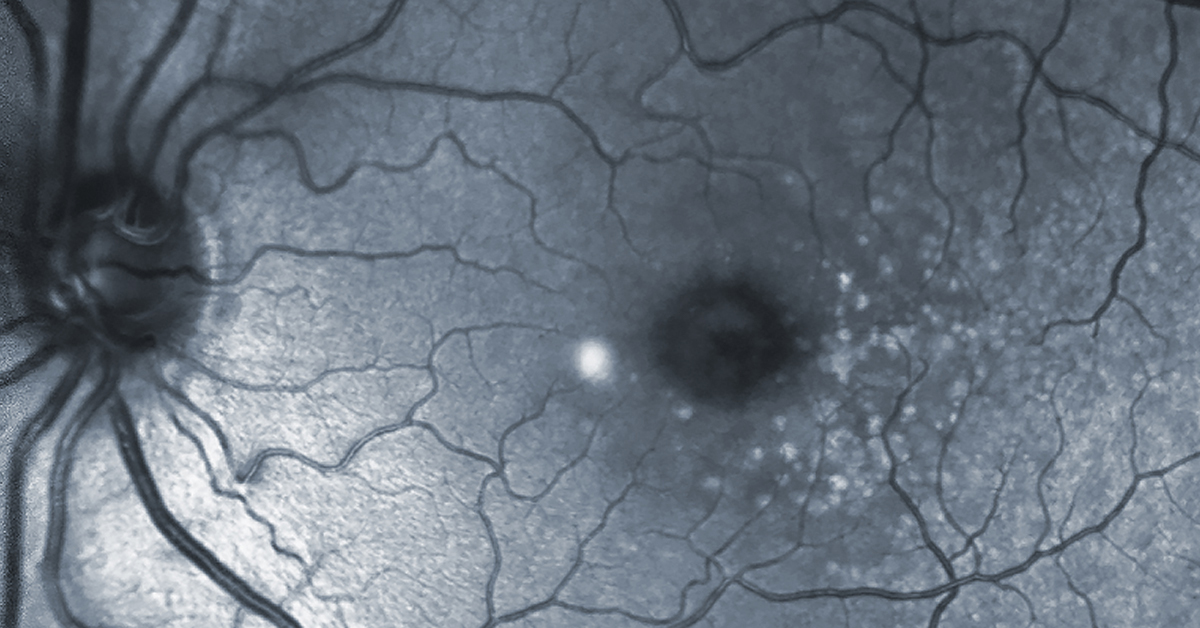
A protein that normally deposits mineralized calcium in tooth enamel may also be responsible for calcium deposits found in the back of the eye of people with Dry Age-Related Macular Degeneration (AMD). In Dry AMD, deposits of lipids, proteins, and chemicals, called drusen, form under the layer of cells that transport nutrients from the blood vessels below, to the light sensing photoreceptors of the Retina above them. As drusen develop, the cell layer and photoreceptors eventually die, leading to blindness. The photoreceptors cannot grow back, so the blindness is permanent. There is not—as of yet—an approved treatment or cure for Dry AMD. Researchers have, however, discovered a calcium-containing mineral called hydroxyapatite (HAP), which is a key component of tooth enamel and bone, in drusen of people with Dry AMD, but not in people with Wet AMD, or with no AMD at all. Further studies investigating how HAP accumulates in drusen may lead to treatments that block its buildup in the eye, which may prevent the progression of the disease. Learn more at https://bit.ly/2X20B92
